

I’m writing from a corner of the empire.
Probably not the empire you are thinking of.
The other one, the one you live in, with its capital roughly at the Ferry Building and its outer ministries in Manhattan, Mayfair and the business-class lounge at Frankfurt. You run it, and that’s great. You price its risk, write its contracts and ship its software, and every so often, between connections, you look up at a screen showing somewhere you have never been and wonder, quite reasonably, what on earth is going on out there.
This is what is going on out there. I will try to be useful about it. The corners of the empire are not so much risky as unreadable, and the market charges for the second as if it were the first. Call it the illegibility premium.
A Kyiv startup’s revenue is as real as a Berlin startup’s. Its structure is very often a Delaware parent with a Ukrainian development subsidiary, which your firm has papered a hundred times. Its engineers are frequently the same engineers your portfolio companies already outsource to. What it lacks is the thing the capital uses to decide what is real: a familiar name, a known fund on the cap table, a press cycle in a language the partners read, a warm introduction from someone who was at the dinner.
The discount closes when someone does the reading. That is the trade, and it is the one we intend to make: read the corners in the original, and write it down in a language the capital can price.
I’m sitting in a new coffee place on Hoholivska called Hyst. They don’t even have a Google Maps location yet, only an Instagram. They sell espresso drinks, their own locally roasted coffee in boxes of ten drip bags, four kinds of pastry, and four kinds of sandwiches. The cardamom bun is superior, existing in a category of its own.
The people around me wear structured cargo pants, black barrel jeans, leather shoes, classic raincoats. One woman has on a red sweater with a thick white ribbon around the collar. People drop in for their caffeine fix, to shmooze with the wonderful baristas, or to hide away in a small corner with their friend to discuss packaging design, video production, and the latest Forbes Ukraine edition. This is a regular Tuesday morning.
At two in the afternoon, there’s a sudden series of explosions. Most often, attacks in the capital occur overnight. But today, they had other plans. A girl sitting across from me nervously checks her phone, scanning Telegram channels for information, evaluating if she should shelter in the bathroom. She turns to her friend and says, “Zircon,” a hypersonic cruise missile, then another explosion.
Another girl, panicking, scrambles to the bathroom and wedges the door open, so she’s still in sight of her friends but has one more wall between her and the street. Then the power goes out. The barista wipes the condensation off the glass of the pastry case. Nobody screams. Nobody leaves. Then, they go back to work.
I used to be a healthcare banker at Goldman Sachs, and I’ve recently lived a peripatetic life in Kyiv and Warsaw while keeping a home base in NYC, which my former colleagues regard as a lateral move roughly the way they'd regard joining the circus.
I’m not here to cover the war; other people do that, bravely and well. I’m here because Ukraine is a place full of problems, and full of people who treat problems as an invitation. Many of the best minds are abroad, so the ones who stayed carry more, and some of what’s being built here is genuinely zero-to-one.
When friends ask why I can’t pull myself away, I ask whether they’ve ever watched an elite swimmer cross an Olympic lane in just a few strokes. The people here are elite athletes in a far more consequential match, one they never signed up for, and they’ve kept their sense of humour. Combat units advertise on billboards for “landscape design” and “event management”.
Tonight, most of them, in New York, San Francisco, London, and elsewhere, will pay to be frightened. They’ll buy a costume and a ticket to something with a fog machine, and tomorrow they’ll agree the haunted house wasn’t that scary.
Halloween is the one night the comfortable world buys fear on purpose, in a measured dose, with a known ending and an Uber home. The rest of the year it pays handsomely not to be frightened at all, and the place where that payment is largest happens to be the one I live in.
In 1921 the economist Frank Knight drew a line that explains this best. Risk is uncertainty you can put odds on; true uncertainty is the kind you can’t. Markets are good at pricing the first and bad at the second, and when they can’t tell which one they’re looking at, they assume the worst and charge for it.
Kyiv has spent four years turning uncertainty into risk. There’s a joke going round on Threads about the minimum setup for winter: your own air-defence division, a cow, a goat and an oil well. The real version is duller and more useful. It’s a generator that powers the lights and your Wi-Fi for 48 hours off the grid, an outage schedule published street by street the night before, and the largest thermos you can find online to keep boiling water for when the microwave, the electric stovetop, and your oven give out so you’re eating noodles from a cup.
This is the most difficult moment since the full-scale invasion began. I cannot say that Ukraine is winning. There are seldom winners in this kind of war. But it is certainly surviving; it won’t fold, and even the Kremlin has noticed it can’t simply be made to do so. Moscow’s theory of this war has always been that Ukraine is a client, so you end it by talking to the patron. First the patron was Washington; now the Kremlin has found a second one standing behind Kyiv. What it still can’t say is the obvious thing: the decision belongs to Ukrainians, and to the neighbours who chose the same side.
I was raised in Baltimore, so let me put it in Baltimore terms.
The War of 1812 is what happens when a former empire won’t accept the divorce. Three decades after losing its colonies, Britain was still stopping American ships and pressing thousands of American sailors into the Royal Navy. For some 25 hours in September 1814, the Royal Navy bombarded Fort McHenry. A lawyer named Francis Scott Key watched from a ship in the harbor, and at dawn the American flag was still there. The poem he wrote became our national anthem. Every American who has sung about “the rocket’s red glare, the bombs bursting in air” has sung about a night like the ones Kyiv has now, but we stopped feeling the words.
Americans call 1812 the second war of independence: the war that made the first one stick. That is the war Ukraine is fighting. In 1776, America was a young state, outgunned by an empire, that won because a distant power decided its fight was worth funding. Ukraine is asking for exactly what France gave us. It is our chance to show that American might and American principles are interwoven. Ukraine merits our dedication.
Which is why this month hurt. On 9 October, according to Le Monde, Steve Witkoff and Jared Kushner spent nearly three hours at the Shell Bay golf club in Florida pitching Kyrylo Budanov, the head of Zelensky’s office, a postwar “prosperity plan.” Russian oil and gas would flow to Europe again through Ukrainian pipelines, and Ukraine would collect the transit fees. Budanov reportedly saw a leash, not a plan. “Our model is not Belarus, but Poland!” he allegedly answered.
Then, mid-meeting, news arrived that Trump had agreed a diesel deal with Putin; the Treasury issued a waiver to let more Russian diesel onto world markets. By Le Monde’s account, an irritated Witkoff then demanded that Kyiv accept the arrangement and stop striking Russian refineries. Nobody at the table demanded that Russia stop striking the substations that power my front-door lock. Does that make sense to you?
Every barrel feeds the budget that buys the Zircon. To much astonishment, it feels like we are being dragged into financing Russia’s war, and it breaks my heart that America’s leadership has created a blood-diesel trade with an American license on it. In Florida, it was called a prosperity plan.
I’ve never been married, but I’d argue the simplest way to understand Russia’s invasion of Ukraine is as a violent divorce. Ukraine’s escape from its abusive ex is permanent. For the abuser, that is unacceptable: he is left alone, cut off. Putin once named it himself: in 2005 he described the Commonwealth of Independent States as a framework for a “civilized divorce.” But he, and in large part, the sociocultural framework of a previously eminent society (the Russian inheritance of Soviet empire) never signed off on it.
I believe the deal-making school makes a simple mistake here, thinking it is facing a rational actor, motivated purely by financial interests. I can see how that seems reasonable for our real estate diplomats. It reads Moscow as a counterparty with a price. It fails to accept that a chauvinist regime saturated in ideological motivation and revisionist history makes sober deal-making extremely challenging. So Washington offers a diesel waiver, talks sanctions relief, floats an Alaska energy project and pitches Kyiv a Russian pipeline. Then it waits for the concession that never comes.
Ukraine won’t be talked back into the marriage. The sooner Washington stops treating a centuries-long “near abroad” campaign of dominion as a 2014 mood swing, the sooner it stops paying for the privilege of being lied to.
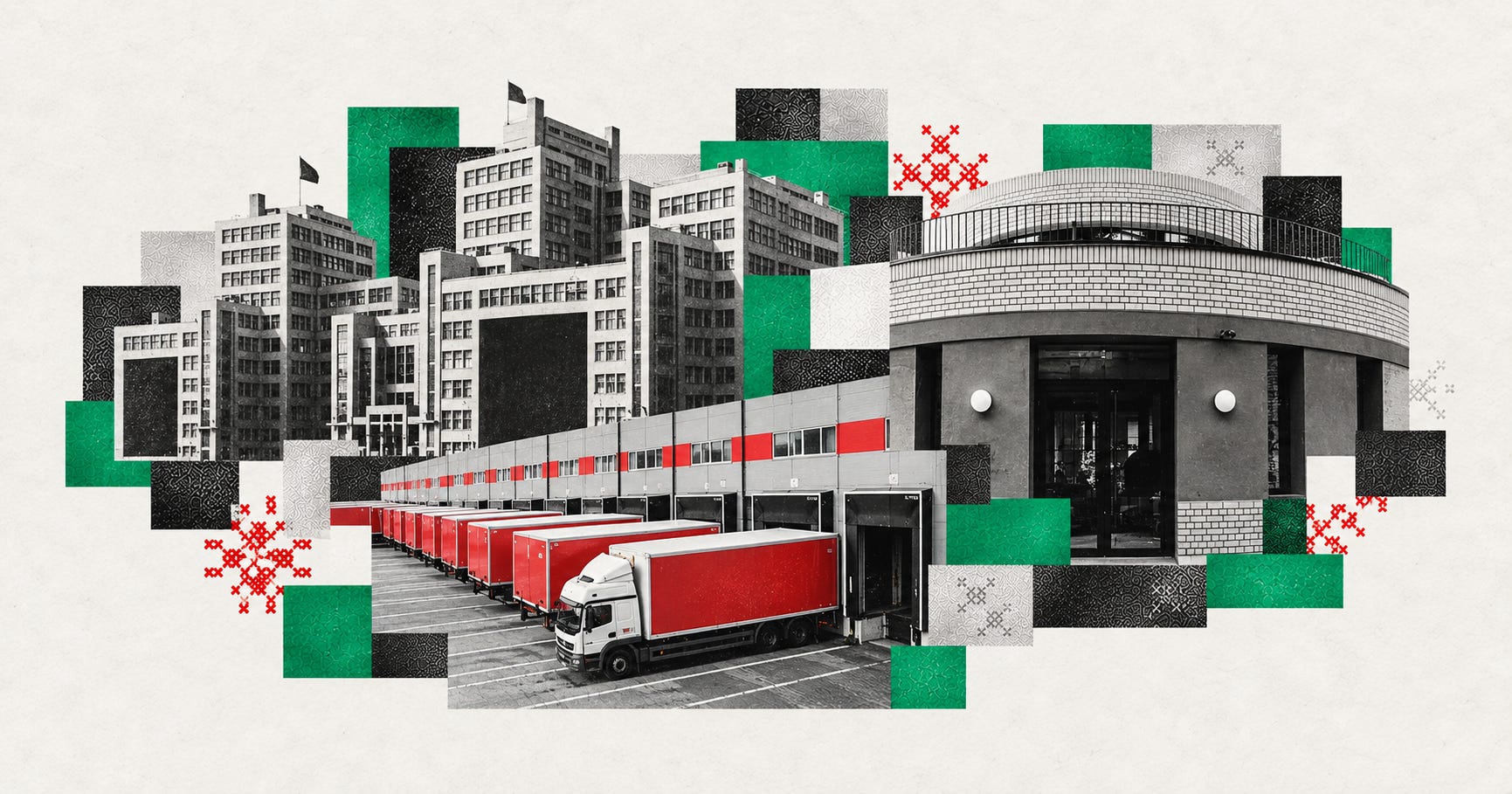
Founded in Poltava in 2001, Nova Poshta, or New Post, delivered 522 million parcels last year, earning UAH 54bn in revenue, up 21%, with a profit of UAH 2.6bn. Today, it has 36,755 parcel lockers, with 6,000 more planned this year, and it continues to automate its sorting hubs with state-of-the-art technology. If you want to understand what Nova Poshta means to Ukrainians, though, don’t start with the numbers.
Nova Poshta is the unbreakable, endlessly adaptable, frontline-capable logistics superpower. Their staff posts viral dancing videos; they will help you pack odd-shaped boxes, and their digital experience is best in class. They have an astonishing number of locations, provide a convenient courier pickup and drop-off service, and deliver next-day domestically or in under 3 days across Europe. In short, Nova Poshta is the pinnacle of what it means to succeed in Ukraine’s competitive, service-obsessed customer environment.
Then it went abroad. Its first European branch opened in Warsaw in October 2023. By the middle of this year, it had 995 service points in 16 countries, and a delivery partnership with UPS in the United States. Its co-owner, Viacheslav Klymov, feels that nobody in the global market cares where a company is from; you win on speed, reach and reliability. Ukraine’s EU accession will take years of treaty chapters, but Nova Post isn’t waiting. It’s joining Europe’s single market one parcel at a time.
And logistics isn’t the only focus. At the Kyiv International Economic Forum last week, Klymov said Nova Poshta had set up its own air defence and had shot down Russian Shahed-type drones aimed at its facilities. His staff, he said, routinely put out fires at company sites before the state’s firefighters arrive, and larger Ukrainian companies are now buying fire engines in Europe. Imagine FedEx running its own air defence. Russia’s campaign against civilian infrastructure was meant to break the country’s ability to function. It has produced companies that are harder to break, and that now do part of the state’s job.
A few minutes’ walk from the Golden Gate in central Kyiv stands a round building on Reitarska Street. It went up in 1986 as a polyclinic for the Union of Writers, so that the Soviet state’s approved authors could see a doctor. The Soviet Union ended five years later, and the building drifted. Then a handful of private buyers took it on, a Swiss film director, Marc Wilkins, who had moved to Kyiv among them. They hired the architect Emil Dervish, who kept the rotunda’s face and rebuilt everything inside: restaurants on every level, light through a ring of windows and a glass dome, a terrace on the roof. In 2024, Reitarska Circle was nominated for the EUmies, the EU’s architecture prize, which is named for Mies van der Rohe, the last director of the Bauhaus.
The street around it is now one of the most popular in the city. Around the corner, a matcha bar and a lingerie label share fifty-six square metres with no seats, under a ceiling modelled on kintsugi, the Japanese art of mending broken pottery with gold. This autumn the city also took up the book rave: ninety minutes of silent reading to an ambient DJ set or, at a bookshop in Podil, earplugs and a no-photographs policy. Brooklyn built a reading party to beat the phone and the loneliness with Reading Rhythms. Kyiv built one to get through the night. At the new ramen bar by the circus, they keep adaptive cutlery behind the counter, for guests who have lost a hand. Those sit on the shelf where the salt is.
The evening routine for me? It gets dark at 4:30 PM. I often stay at the office until 11 PM. Curfew used to be at midnight, and although they’ve pushed it back an hour, I’ve made a habit of getting home by midnight. The curfew, enforced mostly by traffic police, lasts until 5 AM, at which time it is already pitch black, again. I walk back to my flat, and when I get there, I look at the keypad by the door with my fingers crossed, hoping to see a bright red light. If I see it, that means the building has power, and I won’t have to climb 12 flights of stairs.
If there’s no power, it means I won’t shower, because the water pump can’t deliver this hygiene opportunity above the 10th floor. Before going to sleep, I’ll make tea for my girlfriend, who drinks an extraordinary amount of it (two mugs at a time), and occasionally surprise myself by making tea for myself. Americans consume way less tea, and I chalk it up to hot water being a bit of an uncomfortable nuisance for the land of “can I get more ice, please?” Patience has been conquered by Prime delivery.
I grab the tea, go out on the balcony, and watch the nighttime city, masked by different hues of darkness. This kills two birds with one stone: I get to be existential, and she gets to finish her East Coast hours remote AI job in peace.
Knight’s first book reaches the conclusion that risk, which can be measured, earns no special reward, because competition prices it away. Profit is what’s left for whoever will bear the uncertainty that others refuse to measure. Halloween sells the opposite: the thrill of uncertainty with the risk taken out. Kyiv offers the real thing, and the reward will go to whoever does the reading first.
The best storytellers live interesting lives, spending a lot of time with new people and in new rooms, and I hope to become one of them because these stories matter. If you want to pitch me, my inbox is open.
Capital goes where it can read, so once a month I’ll read this place to you.
Same time next time, last day of the month.
Gratefully,
Mark
Excellent writing, Mark! You are a true talent, able to teleport us to Kyiv and make us really feel how it is on the ground.
Fresh blood and open eyes is needed here in the city of demons and domes. Sometimes those of us who are tainted by 5 years of this life, need someone to come in and be the next strong to take the field. Wishing you much luck and success on your forays here. Based on your hangouts, we probably live close to each other.